

HR Executive Chip Houghton and Jennifer Feldman, explain that traditionally, personalized leadership development often requires an executive coach and a leader to go through the process of identifying skills, experiences and exposure needed to move a leader forward. This often involved reliance on subjective interpretation of qualitative 360-degree feedback, which must align to the values of the organization. The talent development professionals and leadership coaches analyze the responses of interviews or survey-based tools which can be time-consuming, and despite their expertise, unconscious biases can creep in and hinder growth. Coaches can unconsciously interpret responses through an emotional lens, favor feedback from higher-ranking individuals, or inadvertently confirm pre-existing beliefs. Dr. Mahzarin R. Banaji, co-author of Blindspot: Hidden Biases of Good People notes, “Our minds create mental ‘shortcuts’ that can lead to biased behavior even if we don’t intend to be prejudiced.”
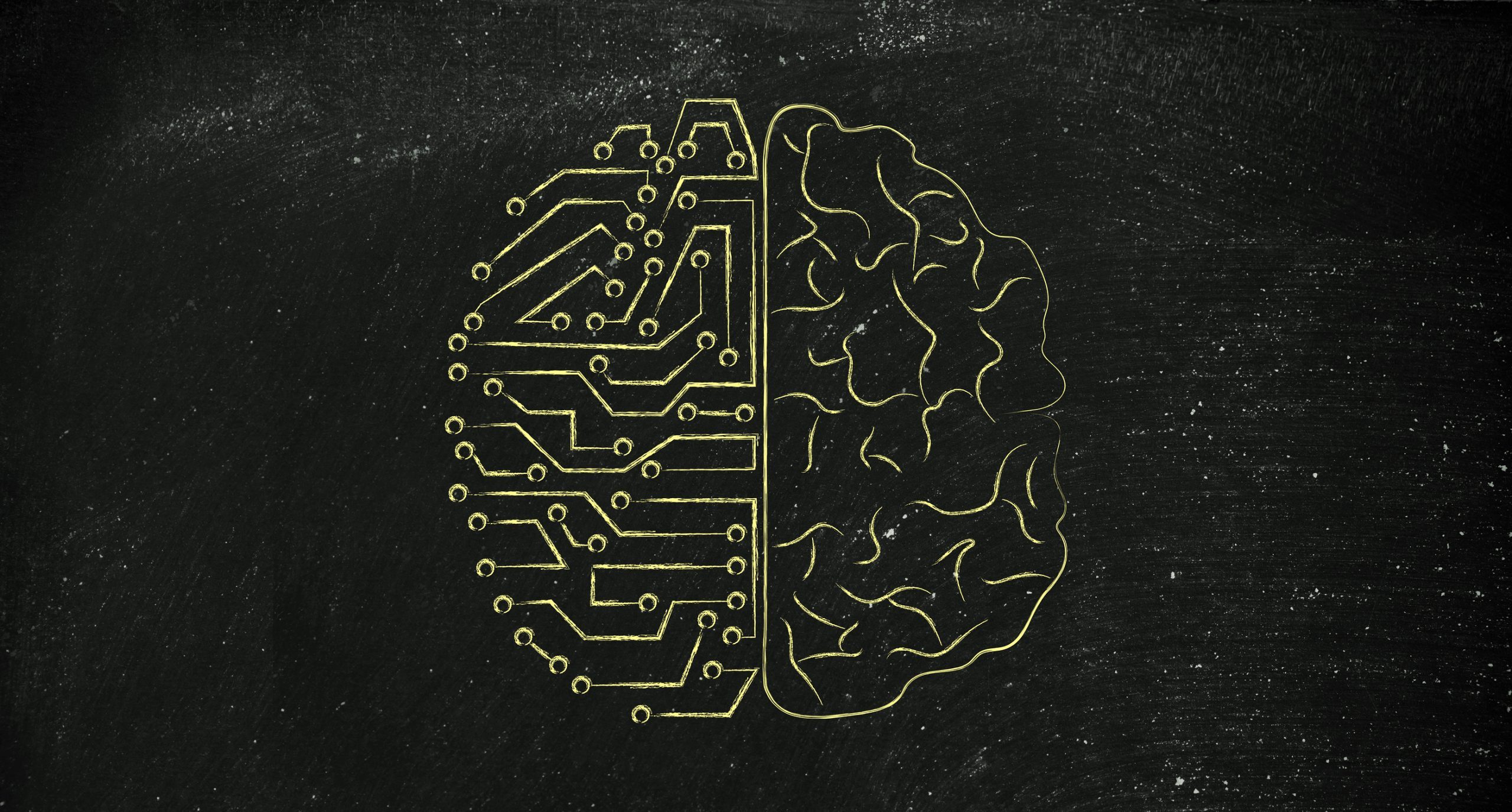
Here is where the rise of AI plays a large role. HR Executive breaks down the different lenses we can interpret through:
- Your Lens- How you see yourself—your strengths, weaknesses and personality traits.
- Their Lens- How others perceive you—your behavior, impact and areas for improvement.
- The Coach’s Lens- A trained interpretation of the feedback, informed by expertise and experience.
- AI’s Lens- An objective, unbiased perspective that can analyze feedback without emotional or cognitive interference.
This fourth additional lens AI can provide, offers coaches a way to confirm and refine their analyses, complementing leaders’ self-awareness, perspectives, and objective analysis. If we approach AI as a tool, it can enhance the human touch, helping leaders uncover patterns, drive growth, and gain organizations a competitive edge.
While AI can be an incredible powerhouse tool for personalized leadership training, expert sources agree that it should only augment and enhance human leadership, but not replace human interaction in leadership development. Peter Fazio from AACSB emphasizes that this approach requires us to consider human abilities, recognize human limitations, and take the steps required to encourage humans’ acceptance of change. Any process should not be undertaken merely to save time or money, but to improve human lives.
An article by Alexandra Cannon from CCL stresses why understanding AI is crucial for leadership in the 21st Century, and that leadership remains a fundamentally social process. She points out that artificial intelligence (AI) can improve processes, accelerate insights, and often deliver results more quickly and accurately than any human. Yet, AI is useless without human input.
Looking at the capabilities of AI can be immense. AI can offer personalized leadership training with data-driven development and adaptive learning systems. It presents opportunities of continuous learning development, real-time feedback, and self awareness through behavioral analysis, simulation or role playing, immersive experiences, and virtual mentors and chatbots. This can enhance emotional intelligence and soft skills through intelligence training, emotional analysis and conflict resolution training. Leaders can grow their communication skills with natural language processing (NLP). Tracking progress, scheduling training sessions, and administrative tasks can be automated, which ultimately streamlines efficiency and reduces institutional costs.
Alexandra Cannon (CCL) explains how these AI tools present profound collaboration between human input and expertise and technological capability. Their outputs depend heavily on the quality of our prompts, and the product of extensive human involvement. AI is only as smart as its human collaborators, at times the dataset is limited, and even advanced models may miss subtle biases and unintentionally reinforce it. This requires us to examine our own biases and to be intentional about how you interact with AI and what inputs you use. Gaining knowledge is more accessible than ever with public-facing advancements like ChatGPT. She reminds us that it’s not just about mastering a tool; it’s about using it to fuel purposeful, positive change. There is a need to keep humans involved when using AI; the more sensitive the context, the more intricate human involvement must be.
When understanding how to use AI safely, there are concerns about data privacy, algorithmic bias which depends on the quality and diversity of data used, and the potential over-reliance on technology. Be aware of the data you’re using, and avoid carelessness with data privacy, especially with handling “personally identifiable data” or sensitive intellectual property. To understand how your data is used in AI, always review the policies of the tools you use, and don’t use AI outputs without human review. To ensure you have fully accurate, complete, and unbiased material, the extra time is worth it to whatever extent possible.
Matt Donovan and Leah Clark write in the article How AI Is Reshaping Leadership Training, how AI doesn’t make leadership obsolete, but it compels leaders to work more intentionally on higher-order thinking that goes beyond the basics of giving answers and assigning tasks. The need will rise to focus on “soft skills” such as communication and the power of human connection in leadership. They point out that “AI can process data and look for patterns, but emotionally intelligent leaders are the ones who understand the nuance of human interaction.” The nuance of handling conflict, making difficult decisions, motivating and inspiring others should be left to the human leader. Leaders know their team, their history, strengths, and weaknesses, and they understand interpersonal dynamics and shared history. AI can be a tool to amplify human connection skills and harness its power to augment human intelligence. AI can provide many apparent answers, by which a leader and team must be critical consumers to determine its validity. By giving leaders a head start on some of the more essential skills, AI “frees up leaders to do what human leaders do best—connect, support, and develop others.”
Leading in today’s everevolving world can be difficult, and you don’t have to do it alone. If you would like to learn more about leadership development, emotional intelligence training, team building, professional coaching, or strategy planning sessions, let’s talk. Contact us for a free consultation by clicking this link: Innovative Connections or calling us at 970-279-3330.
Our mission is to give voice and action to an emerging future. As a partner in your success, we would love to help you find your voice, see your vision, and imagine what the right action could be for you, your team, and your organization.
Used Sources:
HR Executive - Human Resource Executive - media outlet covering strategic issues in HR
https://hrexecutive.com/ai-is-driving-a-seismic-shift-in-leadership-development-how-to-keep-up/
By:Chip Houghton and Jennifer Feldman
AACSB - Association to Advance Collegiate Schools of Business, a global nonprofit organization that accredits business schools worldwide
https://www.aacsb.edu/insights/articles/2024/11/training-human-centric-leaders-in-an-ai-driven-era
By Peter Faziod
How AI Is Reshaping Leadership Training - magazine article https://trainingmag.com/how-ai-is-reshaping-leadership-training/?utm_source=chatgpt.com
By Matt Donovan and Leah Clark
More Sources:
Leadership Development in the Age of Artificial Intelligence - Harvard Kennedy School - Mossavar-Rahmani Center for Business & Government
By Léa Aboumoussa and Jennifer Pfister - M-RCBG Associate Working Paper Series written for the Human Leadership Lab
https://www.hks.harvard.edu/sites/default/files/centers/mrcbg/Final_AWP_244.pdf